The Hidden Cost of Cheap Safety Training
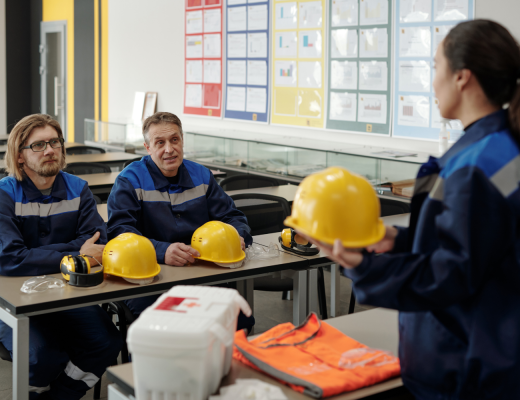
Completion doesn’t equal competence.
Most organisations can evidence completed training.
Certificates.
Attendance records.
Course completions.
On paper, everything looks right, but when something goes wrong, that’s not what gets tested.
Judgement is.
Decision-making is.
Capability under pressure is.
And this is where many organisations unknowingly become exposed:
Not because training happened too little.
But because training completion was mistaken for operational capability.
The real risk isn’t low-cost training.
It’s the false confidence it creates.
Cheap safety training often reduces cost.
It rarely reduces exposure.
Because serious incidents don’t test how quickly somebody completed an e-learning module.
They test whether people can:
Recognise risk
Challenge unsafe decisions
Escalate concerns
Apply judgement under pressure
Make defensible decisions in real operational environments
Because real operational environments don’t look like training environments.
They involve time pressure, commercial pressure, fatigue, assumptions, normalised shortcuts, conflicting priorities.
And this is where capability is truly tested.
Not during course completion.
But during real operational decisions.
When scrutiny arrives, organisations are rarely asked: “Did training take place?”
They are asked: “Did your people make the right decisions?”
And in many organisations, leadership discovers something uncomfortable:
Training was completed.
But capability was never truly tested.
Completion is Easy to Evidence. Capability is Harder.
When safety training becomes a procurement exercise, organisations often begin measuring the wrong things:
Lowest cost
Fastest rollout
Completion rates
Certificates issued
But underneath those metrics, critical gaps can still exist:
Disengaged learners
Rushed completion
Weak knowledge retention
Passive participation
Poor operational transfer
Low leadership engagement
Dashboards may look reassuring.
Certificates may exist.
But operational capability can still remain dangerously inconsistent.
This is where false confidence develops.
And false confidence is far more dangerous than visible non-compliance.
Because organisations stop questioning whether meaningful capability genuinely exists operationally.
No organisation is ever investigated based on how cheaply training was purchased.
When incidents happen, organisations are not judged by:
Course discounts
Completion speed
Procurement efficiency
They are judged by:
Decisions
Behaviours
Accountability
Operational control
Leadership oversight
And increasingly, whether workforce competence can genuinely be evidenced under scrutiny.
Because when scrutiny arrives, training records are only the beginning.
The real question becomes: Did learning translate into safer operational behaviour?
Serious incidents rarely begin with a total absence of training.
They begin when organisations mistake training completion for operational capability.
That distinction matters.
Because there is a significant difference between knowing what the correct answer looks like in a training module and making the right decision under operational pressure.
This is why Phoenix approaches IOSH training differently.
We don’t see training as a compliance exercise. We see it as building defensible workforce capability.
Capability that holds up:
Operationally
Behaviourally
Culturally
Organisationally
Under scrutiny
Because capability is not built through minimal engagement, rushed completion, or passive learning.
It is built through:
credible learning
meaningful understanding
leadership visibility
and operational accountability.
What Meaningful Training Actually Looks Like
At Phoenix, training is not designed simply to achieve completion.
It is designed to influence:
Operational thinking
Behavioural standards
Leadership visibility
Accountability
Decision-making
Organisational culture
Because meaningful training should not end when a certificate is issued. That’s where capability building begins.
And when training quality reflects on your organisation, provider credibility matters.
Especially for HR leaders, Learning & Development teams, Operations leadership, Compliance functions, Health & Safety leadership.
Because procurement decisions come under scrutiny too.
Why Organisations Choose Phoenix Over Low-Cost Training Models
Phoenix IOSH programmes are designed around:
Expert tutor support
Structured learner engagement
Leadership-level training pathways
Organisational rollout support
Real operational relevance
Meaningful knowledge retention
Workforce capability development
Training that supports behavioural change, not just certification
This is not training designed simply to issue certificates. It is training designed to strengthen workforce capability where operational decisions actually happen.
Because organisations don’t need more certificates. They need greater confidence that capability genuinely exists across the workforce.
What Happened When Helix Engineering Services Rethought Safety Training
“We underwent a comprehensive IOSH training programme with Phoenix. Upon their recommendation, we started with the Leading Safely course for our Executive team, followed by the Managing Safely course for middle management, as well as members of our Health and Safety committee.
Starting with the Executives was such a great recommendation as it made the leaders of our organisation fully understand their responsibilities; they quickly realised that Health and Safety should be a board-level priority for the business. This alone started the shift in culture of the business, and it worked from the top down.
Following the rollout of the IOSH programme, things in the business changed significantly. The business adopted a much more proactive approach to health and safety management; investigations were so much more thorough and more professional with clear actions and ways to improve.
In fact, as of today, the company has gone 846 days without a loss-time incident. This is compared to the previous record of 210 days.
The impact this programme had on embedding a culture of safety across the organisation was incredible. I honestly can’t recommend Phoenix highly enough.”
David Gilmore
Health & Safety Manager
Helix Engineering Services Ltd
846 Days Without a Loss-Time Incident
846 days without a loss-time incident wasn’t achieved through faster completion, cheaper certificate, or lower training spend.
It was achieved because safety capability became embedded operationally across the organisation.
Leadership engagement improved.
Accountability increased.
Investigations became more robust.
Operational ownership strengthened.
Risk was challenged earlier.
That is the difference between training completion and workforce capability.
Trusted by Organisations That Need Confidence Under Scrutiny
Rated 5 Stars on Trustpilot by over 2500 learners.
Phoenix is trusted by thousands of learners and organisations across the UK because our focus extends beyond certification.
We help organisations build confidence that safety capability exists not only on paper, but operationally.
Because when something goes wrong, organisations are not judged by how cheaply training was purchased.
They are judged by whether risk was properly understood, managed, challenged, and controlled in reality.
Most capability gaps remain invisible until pressure exposes them.
Many organisations believe capability exists, right up until something tests it.
That’s why the cheapest training is often the most expensive under scrutiny.
A certificate may satisfy procurement.
But capability protects organisations.
And capability is what determines whether decisions hold up when pressure, accountability, and scrutiny are highest.
That’s why Phoenix focuses on competence, not just completion.
Build Workforce Capability That Holds Up in Reality
If your organisation was scrutinised tomorrow, would you feel confident your workforce capability would genuinely hold up?
Whether you are training first-line managers, supervisors, operational leaders, department heads, or executive leadership, Phoenix helps organisations build safety capability that supports stronger decisions when pressure, accountability, and scrutiny are highest.